Case study · Gymme
- Roles in the same app: athlete and trainer
- 2
- Badges, 10 levels and 4 challenge types
- 21
- Play Store rating
- 5,0
The pain
This time the request came from no client: it came from the gym. When the factory's owner started working out, the app the gym offered was bad to use. Slow, confusing, built for the gym rather than for the person training. Logging the weight of a set took more taps than the set itself, and the history did not answer the basic question: am I improving?
The answer was the usual one when the tool does not fit: build one that does. The first version of Gymme had a single user, its author, and did the essentials: build the workout, run it set by set and keep the history.
The analysis
The personal app led to conversations at the gym. Personal trainers and instructors saw the screen and described their routine: students' workouts in spreadsheets or PDFs, weight adjustments by WhatsApp message, class attendance on paper, weight and measurement progress in a notebook. Each new student was a set of loose files, and the professional had no way to see at a glance who was training and who had disappeared.
The analysis showed that the problem of the person training and that of the person training others were the same problem seen from two sides. The athlete needs a simple place to execute and log; the trainer needs to see that log, prescribe at scale and talk without leaving the context. An app serving only one side would leave the other out, and the data would stay scattered.
The solution: one app, two roles
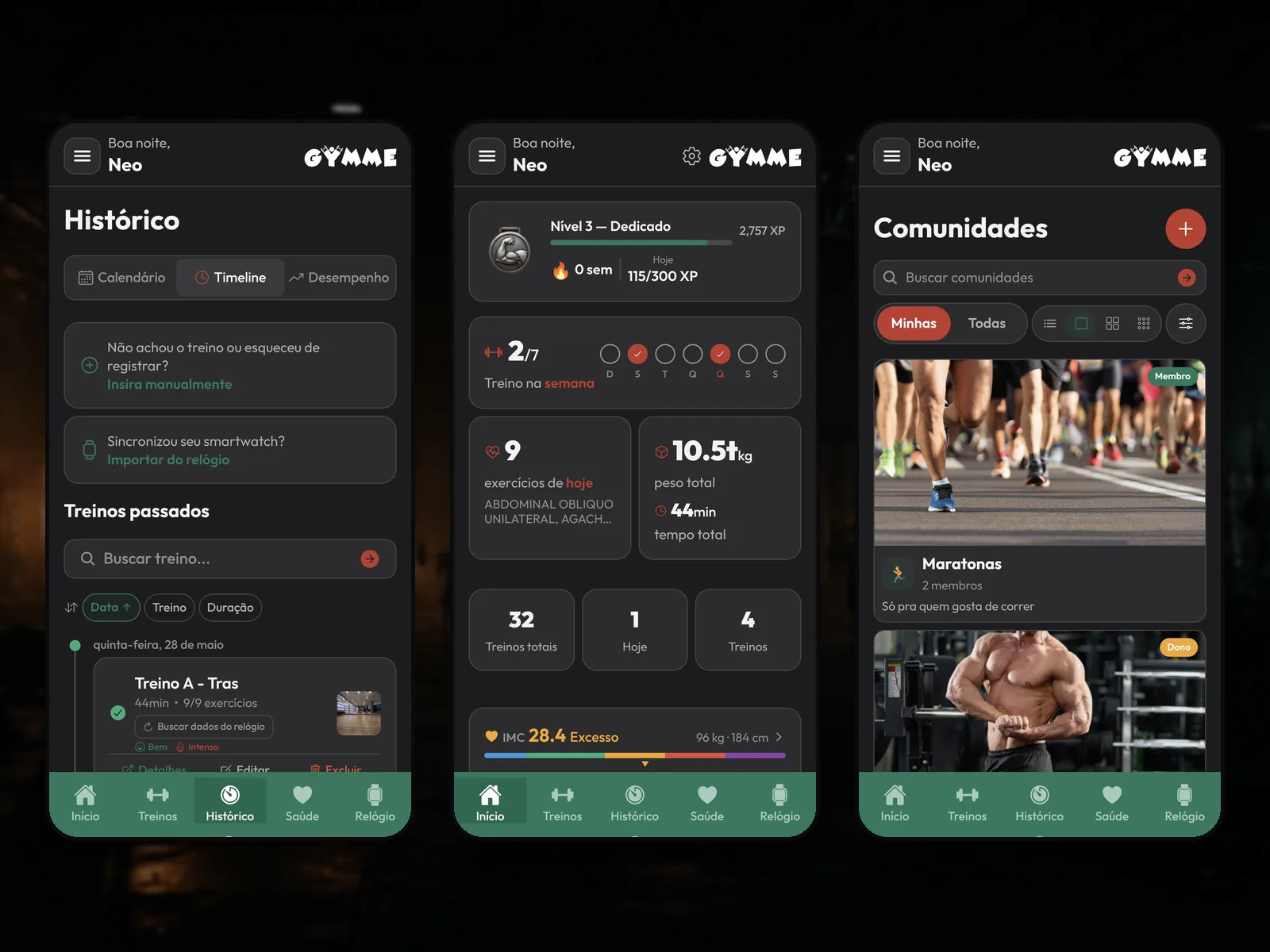
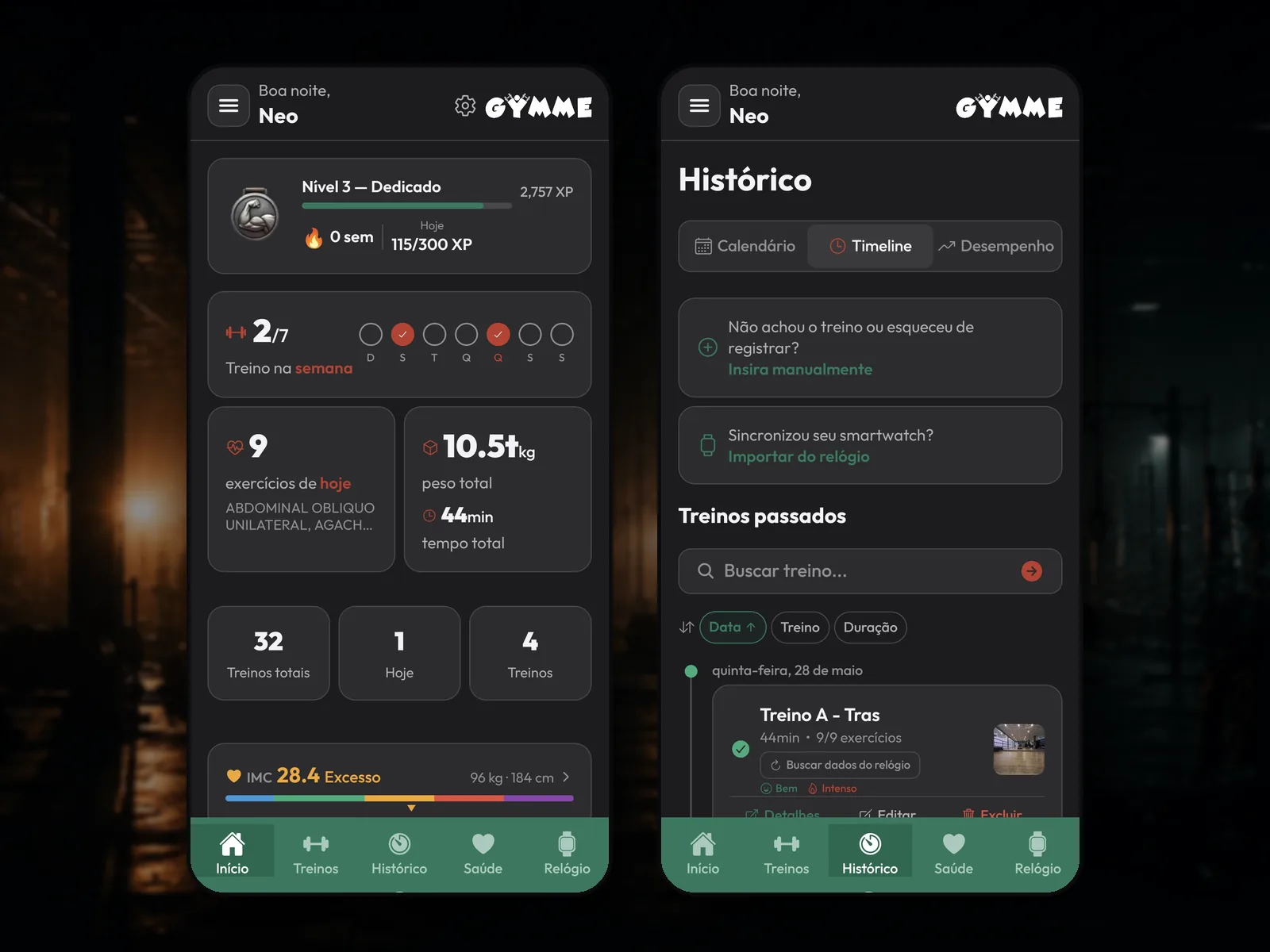
Gymme became a platform with two roles in the same app. The athlete builds workouts or receives them from the trainer, runs them with a rest timer, logs each set with weight and reps and closes the session with a rating of how it felt. The history has a calendar, a timeline and per-exercise performance, and accepts workout photos and activities imported from the watch, such as runs and rides.
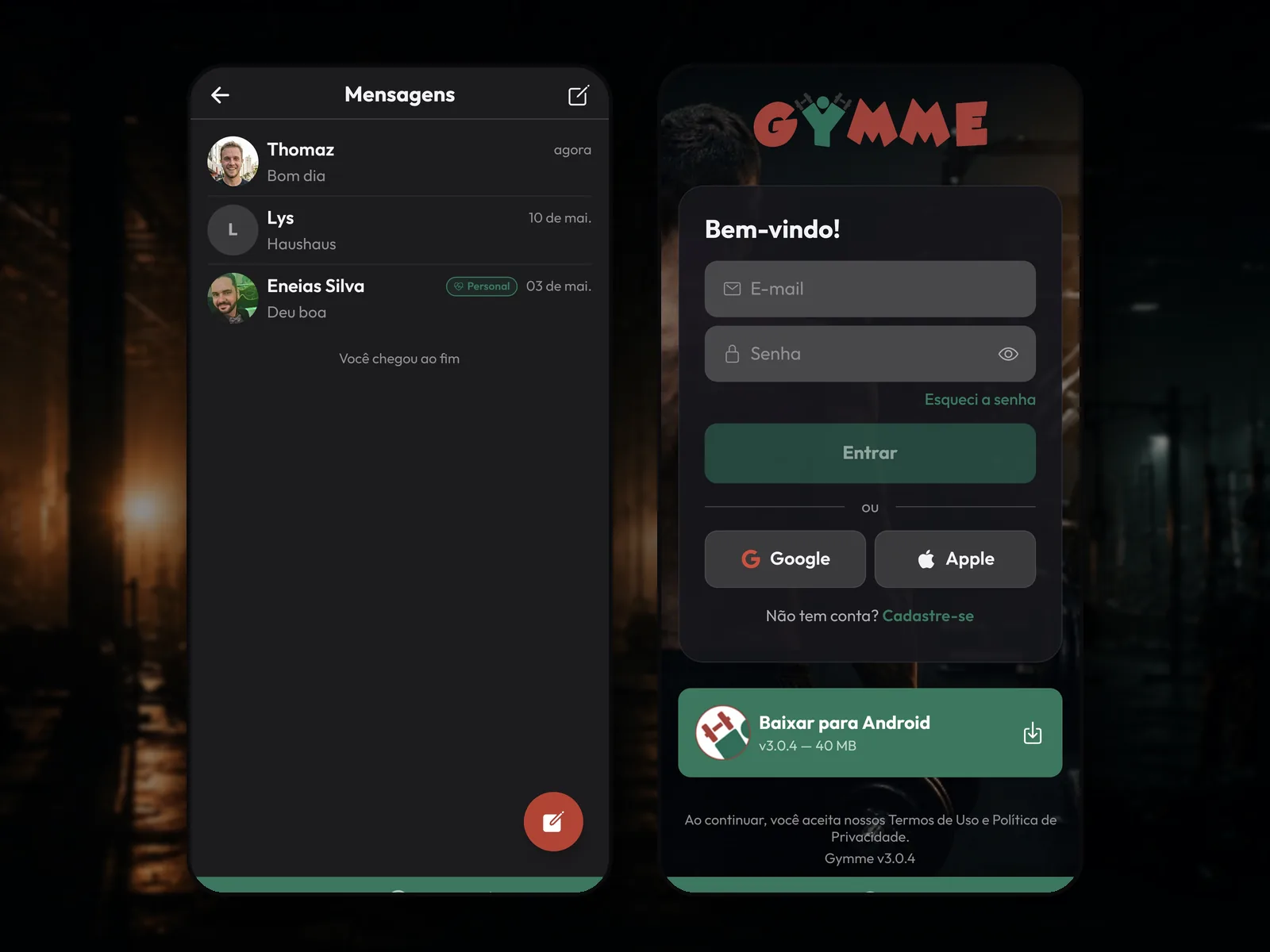
The trainer has an exercise library by muscle group and workout templates assigned to several students at once; when the template changes, the trainer chooses who gets the update. They schedule one-on-one sessions and recurring group classes with capacity and schedule-conflict detection, take attendance with present, absent and justified, and see each student's history. Chat lives inside the app, with photos, quoted replies and push notifications, so a weight adjustment never has to go to WhatsApp.
On the health side, the app reads from the watch through Google Health Connect: live heart rate during the workout, with zones, oxygen saturation and calories, and body measurements follow known protocols, with girths, skinfolds and weight and waist goals.
The solution: consistency as a game
Gamification exists to reward one thing only: consistency. Every workout, measurement, record or interaction earns XP, with a daily cap and a multiplier that grow with the streak, the run of weeks in which the athlete hits their own goal. There are 10 levels, from Beginner to Legend, and 21 badges in six categories, some of them secret, such as training before seven in the morning. A personal record is only recognized once the weight is consolidated over three sessions, so an isolated test does not become a PR.
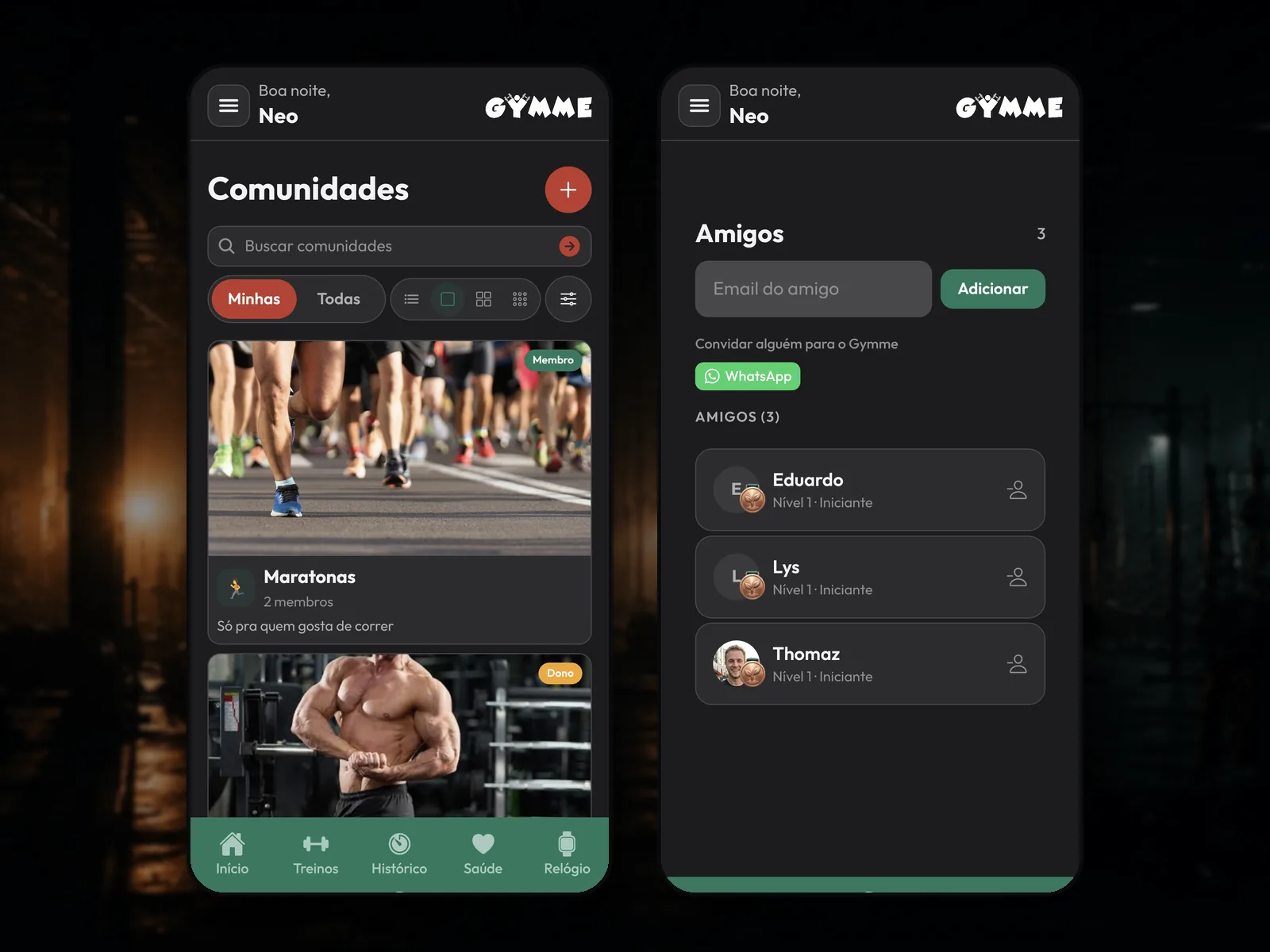
On top of that come challenges, created by the trainer or by communities: frequency, completion, record or activity, with a deadline and full XP on completion. Communities bring people together by sport or interest, with a feed, reactions and endless challenges that restart each cycle. Leaderboards compare the week's XP, streak and level only among friends and students of the same trainer, and everyone decides whether to appear in them.
How it was built
Expo with React Native and TypeScript in the app, with Expo Router, and the same code serving the web version so trainers can build workouts on a computer. The backend is a PHP API with MySQL on the same shared hosting as the factory's other projects, with no dedicated server, 46 versioned database migrations and sign-in with Google or email and password. APK and AAB builds run in local Docker or on GitLab CI, triggered by tag.
Privacy was treated as a requirement, not a footer: versioned consent under Brazil's LGPD, separate consent for sensitive health data, JSON data export and account deletion inside the app and through a public page. A student's health data is never shared, not even with their linked trainer. Monetization comes from trainer plans, with student quotas and a tier that puts the professional's own brand in the app.
An admin panel tracks users, plans, moderation and errors reported by the app. A public manual explains every gamification rule, so nobody wonders why they earned less XP one day.
Outcome
The app that was meant for a single user is published on the Play Store, with a 5.0 rating from its first reviews, and in use by friends, personal trainers and their students. In seven months, from March to October 2026, it took over 550 commits and 150 tagged versions to go from a workout log to a platform with two roles, chat, classes, health, gamification and communities.
The motivation is the same as on day one: the author still trains with it. It is the kind of product the factory builds when the pain is its own, and it shows end to end how a personal tool becomes a platform: by listening to the people who live the problem from the other side.