Case study · AlugMe
- roles: landlord, tenant and admin
- 3
- contract digitally signed by both parties
- SHA-256
- photo inspections, move-in and move-out
- 2
The gap
Someone with a property to rent usually picks between two bad paths. Hand it to a large agency, which takes a share of the rent every month and imposes its own pace for contracts, inspections and adjustments. Or rent on their own, with a contract template downloaded from the internet, an inspection over WhatsApp and no guarantee that what was agreed will hold.
AlugMe was designed for that landlord: a platform that does the useful part of what an agency does, the process, without the fee and without the paperwork.
What was built
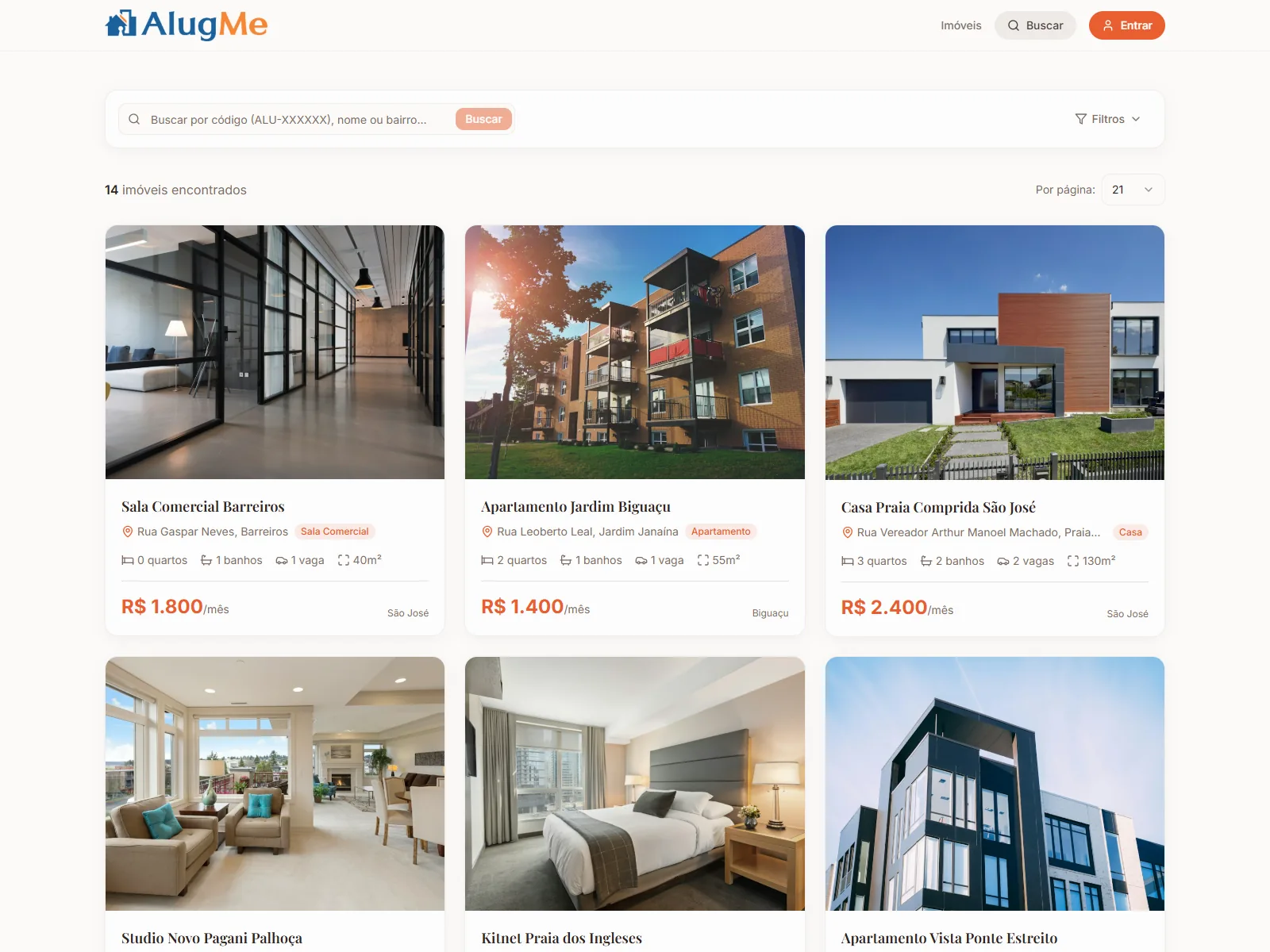
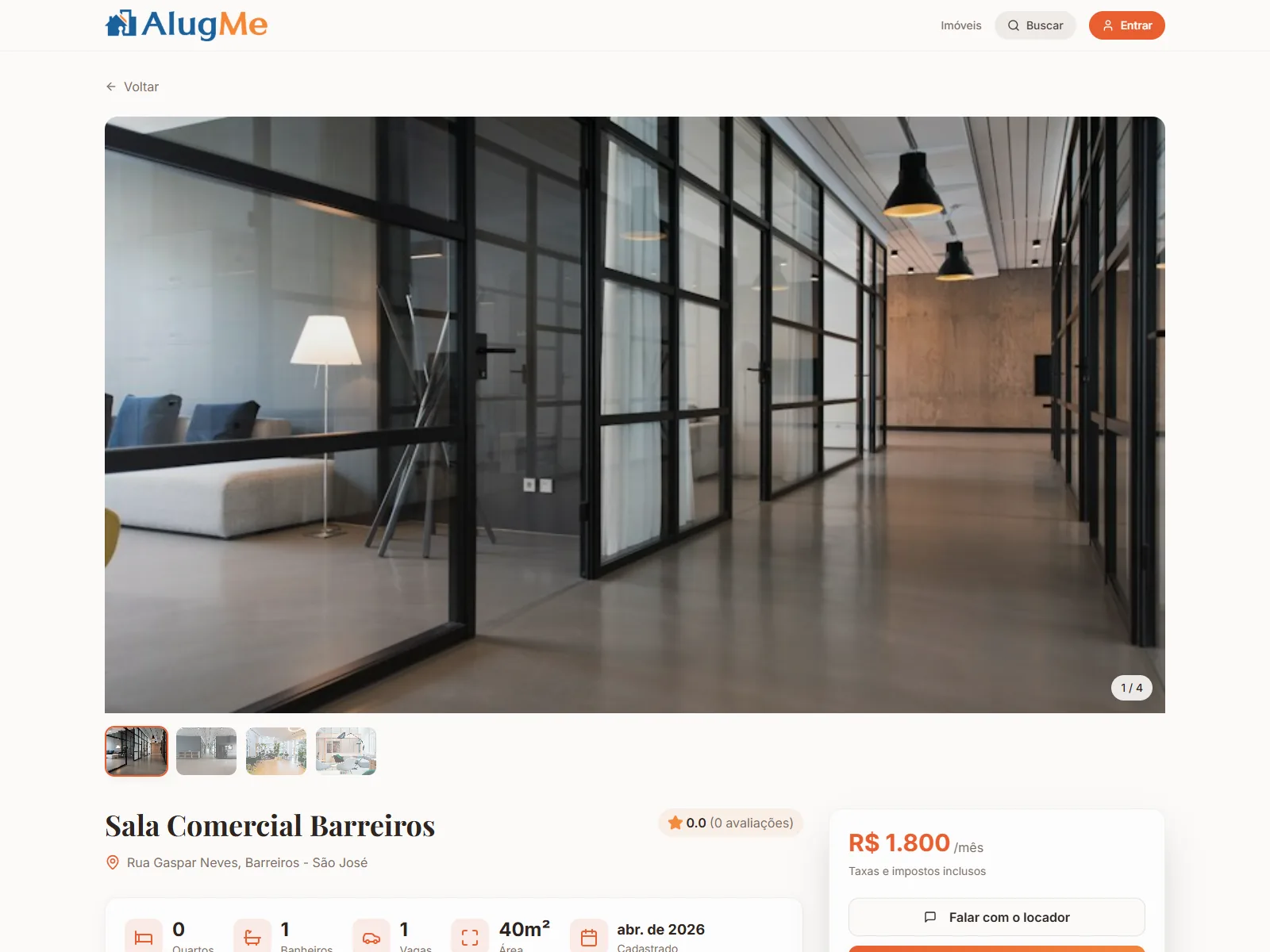
The tenant finds the property through a search with filters by city, neighbourhood, type, bedrooms, price and area, and sees the page with gallery, map, amenities and the landlord's details. From there the rental flow begins: the contract is generated on the platform, reviewed and digitally signed by both parties, with a SHA-256 hash guaranteeing that the signed text is the stored text.
The rental has a managed lifecycle: new, active, suspended, closed. Move-in and move-out inspections are recorded with photos and notes and signed by both sides, so returning the property does not turn into an argument over memories.
The landlord has a panel with properties, rentals, contracts, inspections, bank account and company data. The platform administrator manages users and the showcase banners. Payments go through split billing at Pagar.me, with recipient onboarding and identity verification, so the rent lands directly with the owner.
Technology
The front end is React with TypeScript, shadcn/ui components on Tailwind, TanStack Query for data and React Hook Form with Zod on the forms. The API is .NET 8 with Entity Framework Core on SQL Server, JWT authentication, contract PDF generation with QuestPDF and Swagger documentation. The local environment starts with Docker Compose. More than 130 releases since the project began.
The flow end to end
On the landlord's side: list the property with photos, address on the map, amenities and price; receive the rental request; generate the contract from the data already entered; sign; schedule the move-in inspection and record it with photos on the day the keys are handed over. On the tenant's side: create an account, find the property, request the rental, read and sign the same contract, sign the inspection. Both receive the contract PDF generated by the platform.
During the rental, the status says where things stand. A missed payment can suspend it; returning the keys opens the move-out inspection, compared against the move-in one, and closes the cycle. To get paid, the landlord registers a bank account and goes through the identity verification the payment gateway requires; from then on the platform splits every payment automatically between the landlord and the service fee.
No off-the-shelf tool covered contract, inspection and payment split in the same flow, and that was the point: doing the three together is what takes the paperwork off the landlord's plate.
Outcome
AlugMe is live at alugme.com, with properties listed and the full cycle working: search, signed contract, inspection and payment. It is the kind of product the factory builds from scratch when the need does not fit any off-the-shelf tool.